
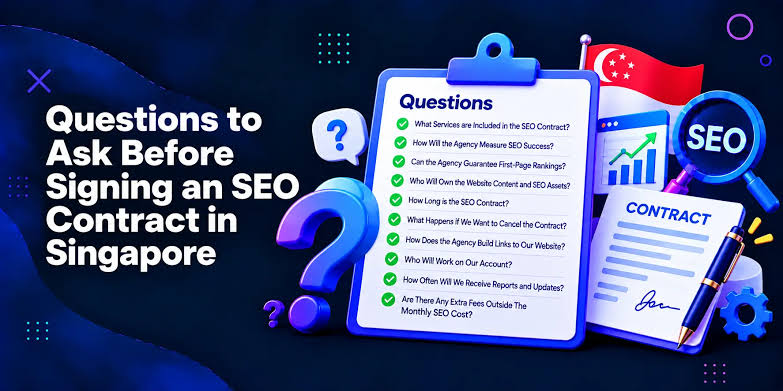
7 Questions to Ask Before Hiring an SEO Consultant in Singapore
Choosing an SEO partner can influence how customers discover your business, evaluate your services, and decide whether to get in touch. Before committing to a campaign, businesses should understand how a consultant approaches technical improvements, content planning, competition, and performance measurement. Asking the right questions when evaluating an SEO Consultant Singapore businesses can help clarify expectations, uncover practical expertise, and establish a strategy built around long-term commercial goals rather than short-lived ranking gains.
| Key Takeaways Define business goals before comparing SEO proposals.Ask for evidence of experience and a clear working process.Understand how technical SEO, content, and search intent fit together.Check reporting methods, timelines, and communication arrangements.Choose a consultant who explains risks honestly and prioritises sustainable growth. |
1. What Experience Do You Have With Businesses Like Mine?
SEO requirements vary depending on the business model, target audience, and level of competition. A local service provider may prioritise location-based searches, while a business selling across multiple markets needs a different approach to website structure and international visibility. Understanding a consultant’s experience helps you determine whether their recommendations will suit your commercial priorities.
Instead of focusing only on the number of years they have worked in SEO, ask how they have handled challenges similar to yours. Their answers should demonstrate practical understanding rather than relying entirely on broad claims.
What to look for
Ask the consultant to explain previous projects, the problems they identified, and how they measured progress. Relevant experience may include improving organic traffic, resolving indexing problems, strengthening service pages, or increasing qualified enquiries.
Consider these questions:
- Have you worked with businesses in my industry?
- What SEO challenges did those businesses face?
- How did you measure the results of your work?
- What did you learn from campaigns that did not perform as expected?
A consultant should respect client confidentiality while still explaining their methods and outcomes clearly. Specific examples provide a stronger basis for evaluation than unsupported claims of success.
2. How Will You Develop an SEO Strategy for My Business?
A useful SEO strategy should begin with an understanding of your website, customers, and commercial objectives. Recommendations made before reviewing these factors may overlook important technical problems or target search terms that attract visitors without generating meaningful business opportunities. Ask how the consultant will assess your current position before deciding what to prioritise.
The aim is to understand the reasoning behind the proposed work. A tailored plan should explain which improvements matter most, why they are necessary, and how they connect to your business goals.
What to look for
A structured approach commonly includes:
- Reviewing the website’s technical condition and current organic performance.
- Researching search intent, competitors, and relevant keywords.
- Identifying gaps in important landing pages and content.
- Prioritising tasks according to impact, effort, and available resources.
- Establishing realistic milestones for reviewing progress.
Ask for a clear explanation of the first few months of work. While exact outcomes cannot be guaranteed, a consultant should be able to outline the initial activities, dependencies, and measures used to evaluate progress.
3. Which SEO Activities Will You Prioritise First?
SEO includes several connected activities, but not every website needs the same work at the same time. A site with major crawling issues may require technical fixes before expanding its content, whereas another business may already have a sound technical foundation but weak service pages. Understanding priorities helps you judge whether the proposed campaign addresses genuine needs.
It also prevents businesses from paying for a long list of activities without understanding their purpose. Ask the consultant to explain which tasks are essential, which can wait, and how the order of work was decided.
What to look for
| SEO area | Questions to ask | Why it matters |
| Technical SEO | Are important pages accessible and indexable? | Helps search engines discover relevant content |
| Keyword research | Does the research reflect customer intent? | Connects pages with appropriate searches |
| Content optimisation | Are existing pages useful and complete? | Improves relevance and customer understanding |
| Internal linking | Can users and search engines navigate key pages? | Supports discovery and site structure |
| Performance analysis | Which results will be reviewed regularly? | Helps guide future decisions |
The strongest proposal is not necessarily the one with the most deliverables. It is the one that identifies the right work for your website and explains how each activity supports a broader objective.
Companies can explore SEO Services to understand how technical optimisation, keyword research, and content improvements work together to strengthen search visibility and support long-term growth.
4. How Will You Measure SEO Performance?
Rankings and traffic can help indicate whether a website is gaining visibility, but they do not explain the full business impact. A campaign might attract more visitors without increasing enquiries if the landing pages do not meet user expectations. Businesses should therefore understand how a consultant connects search performance with meaningful outcomes.
Before signing an agreement, clarify which metrics will be tracked, how often reports will be shared, and how the findings will influence future work. Reporting should help you make decisions, not simply present a collection of numbers.
What to look for
Depending on your objectives, useful indicators may include:
- Organic clicks and impressions.
- Visibility for commercially relevant search terms.
- Traffic to important service or product pages.
- Qualified leads, enquiries, and conversions.
- Organic revenue for ecommerce businesses.
- Technical issues resolved and improvements completed.
Ask which analytics tools will be used and whether conversion tracking needs to be configured. A reliable consultant should explain data limitations, distinguish between activity and results, and avoid attributing every business improvement directly to SEO without evidence.
5. What Is Your Approach to Content and Search Intent?
Content helps potential customers understand your products, compare options, and find answers before making a decision. However, publishing more pages does not automatically improve search performance. The information must match what people are looking for and provide a clear reason to choose your business.
What to look for
A practical content strategy may involve:
- Improving existing pages before creating unnecessary new ones.
- Answering customer questions with accurate, specific information.
- Organising related topics into a logical website structure.
- Adding internal links where they help readers explore related information.
- Reviewing outdated pages and consolidating overlapping content.
The consultant should also explain how content recommendations will reflect your brand’s expertise. Content that demonstrates first-hand knowledge and helps customers make informed decisions is more valuable than articles created simply to include keywords.
6. How Will You Adapt SEO for My Target Markets?
A business targeting customers throughout Singapore may have different needs from one serving buyers across Asia, Europe, or several other regions. Language, location, search behaviour, competition, and website structure can all influence how pages should be organised. Discussing target markets early helps ensure that the campaign reflects how your customers actually search.
This question is particularly important for businesses planning to expand beyond their existing audience. International campaigns require coordination between technical implementation, local relevance, and market-specific content.
What to look for
Ask how the consultant would address:
- Country-specific or language-specific landing pages.
- Appropriate URL structures and hreflang implementation where relevant.
- Local search intent and terminology.
- Differences in competitors across target markets.
- Consistent tracking of performance by country or language.
Businesses expanding into new regions can explore International SEO to understand the considerations involved in improving visibility across different markets.
7. What Will Communication, Pricing, and Responsibilities Look Like?
Even a well-designed strategy can struggle if expectations are unclear. Before hiring a consultant, establish how recommendations will be delivered, who will implement changes, and how progress will be reviewed. Clear arrangements help avoid delays and make it easier for your team to work with the consultant effectively.
Pricing should also be considered alongside the scope and quality of the work. A low fee may cover only a limited set of activities, while a larger proposal may include technical analysis, content planning, implementation support, and more detailed reporting.
What to look for
Before agreeing to a campaign, confirm:
- The work included in the monthly fee or project price.
- Who is responsible for website and content changes.
- How frequently meetings and performance reports will take place.
- How additional work or unexpected issues will be handled.
- Contract length, cancellation terms, and access to reporting data.
Be cautious of guaranteed rankings, unexplained packages, or pressure to sign without time to review the proposal. A professional consultant should be comfortable explaining both the opportunities and the limitations of the recommended strategy.
Final Takeaway
Hiring an SEO consultant is an important decision because the quality of the strategy can influence your website’s visibility, user experience, and ability to attract relevant customers. Asking these seven questions helps businesses compare expertise, understand proposed activities, and establish realistic expectations before investing. The best working relationship is built on clear communication, evidence-based decisions, and continuous improvement.
SEOCompany.me offers digital marketing solutions for businesses looking to strengthen their online presence and improve organic search performance.
Ready to explore opportunities for sustainable online growth?
Visit SEOCompany.me to discover strategies that can support your business objectives.
Frequently Asked Questions
1. What does an SEO consultant do?
An SEO consultant analyses website performance and recommends ways to improve organic visibility. Their work may include keyword research, technical SEO, content optimisation, and performance tracking.
2. How much does an SEO consultant in Singapore cost?
Costs depend on website complexity, competition, and the scope of work. Compare pricing, deliverables, and experience before choosing a consultant.
3. How long does it take to see SEO results?
SEO results vary depending on competition, website condition, and the improvements implemented. Meaningful progress often takes several months, so consistent monitoring is important.
4. Should I hire an SEO consultant or a full-service agency?
An SEO consultant may suit businesses needing specialised guidance, while a full-service agency can offer broader marketing support. Choose based on your goals, budget, and available resources.
5. How can I identify a trustworthy SEO consultant?
Look for transparent reporting, realistic expectations, relevant experience, and clear communication. Avoid consultants who guarantee specific rankings or promise instant results.